Make bilingual access part of the programme
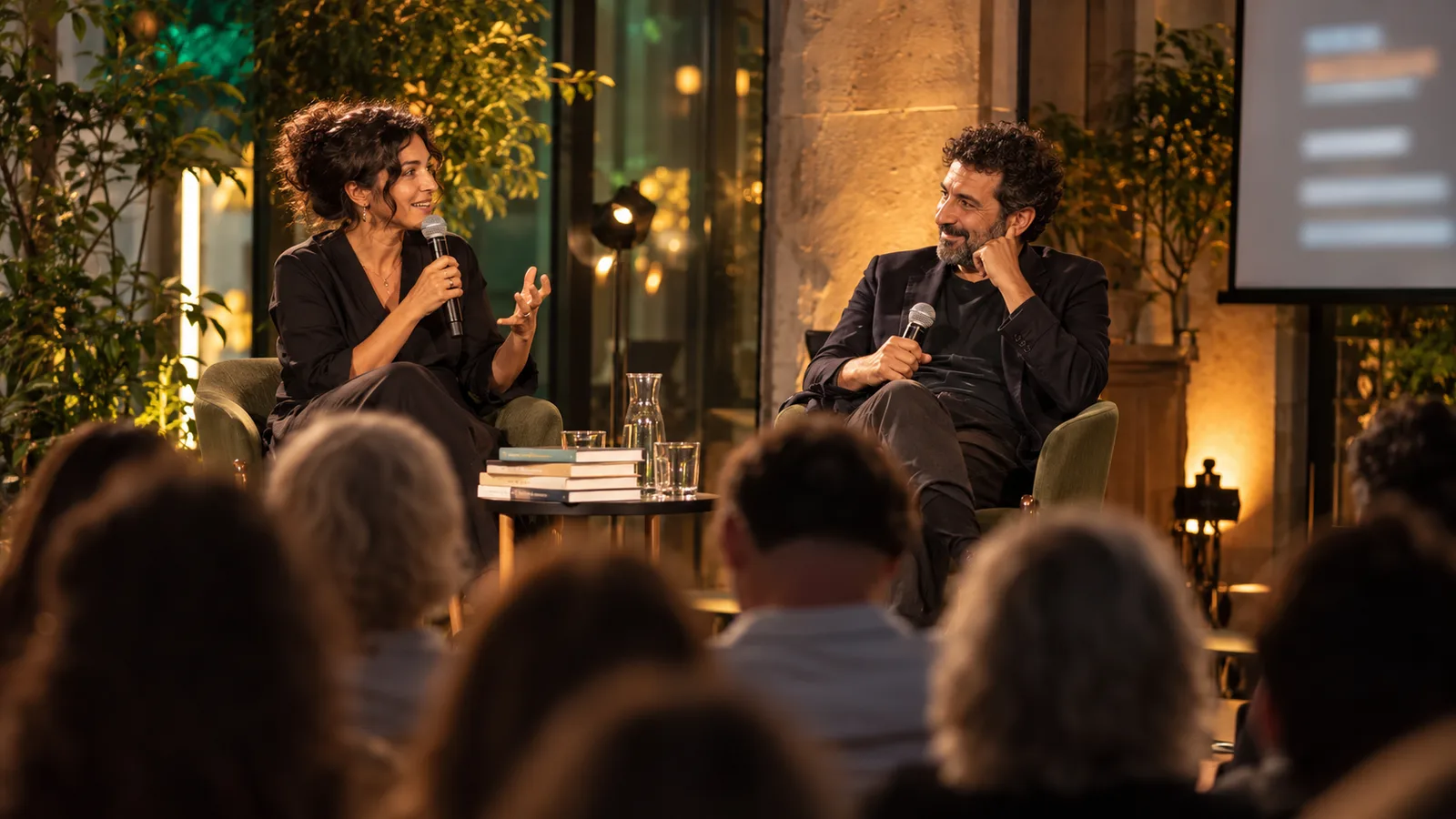
A Turkish reading with German questions or a German tour for another language group needs a clear process. Name the language pair in the invitation. Explain whether guests read on a shared screen or their own device.
Include audience questions in the plan. Without a microphone, those contributions will not reach recognition. The moderator should explain access and possible errors in automatic output.
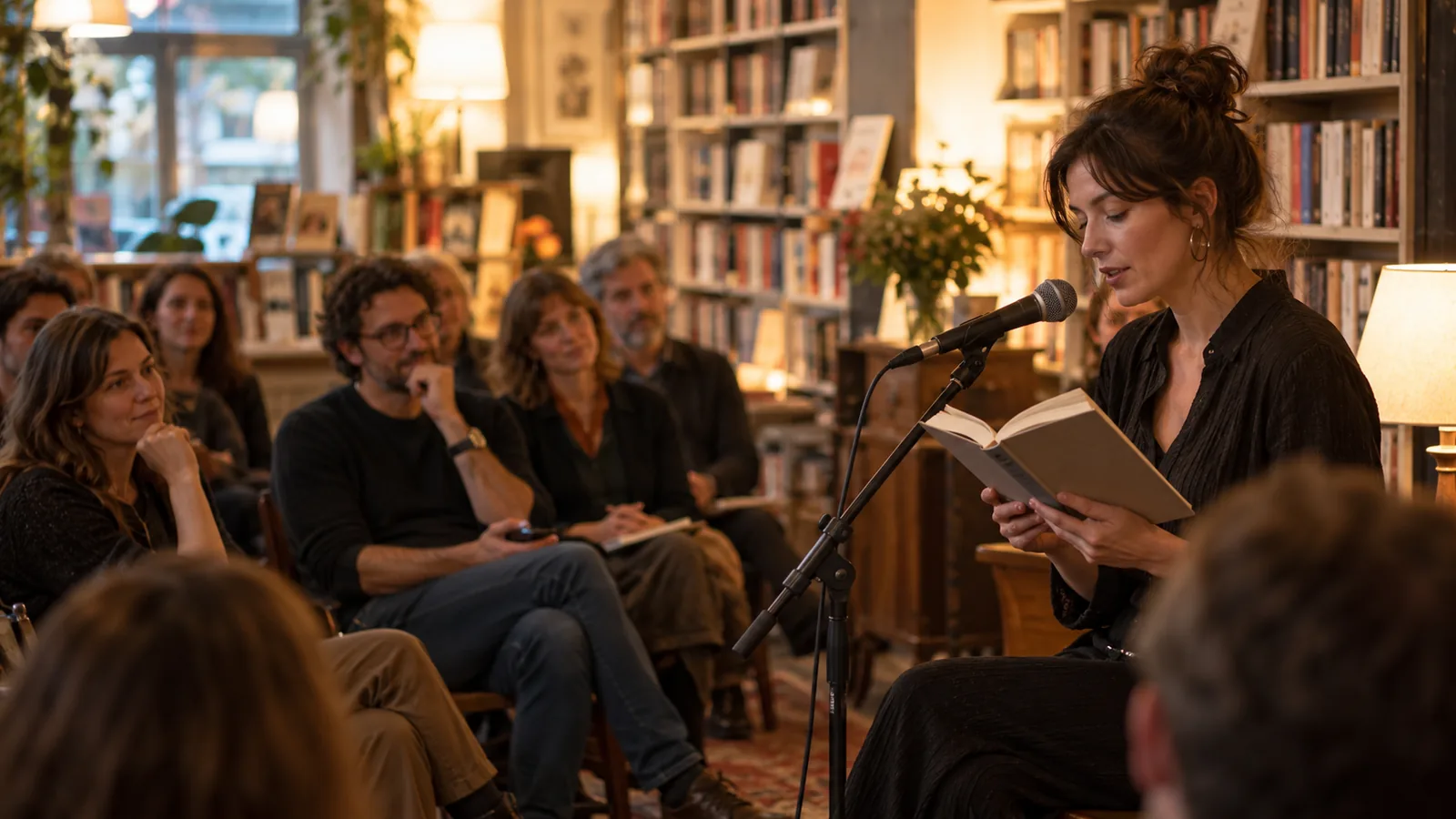
Readings and author evenings
Test a passage representative of the actual work. Names, metaphors and wordplay are more demanding than a welcome. A professionally prepared translation may be better for literary material.
If you use live translation, keep the microphone close and allow reading pauses. Put text near the stage sightline. After the rehearsal, ask whether the other language remains understandable.
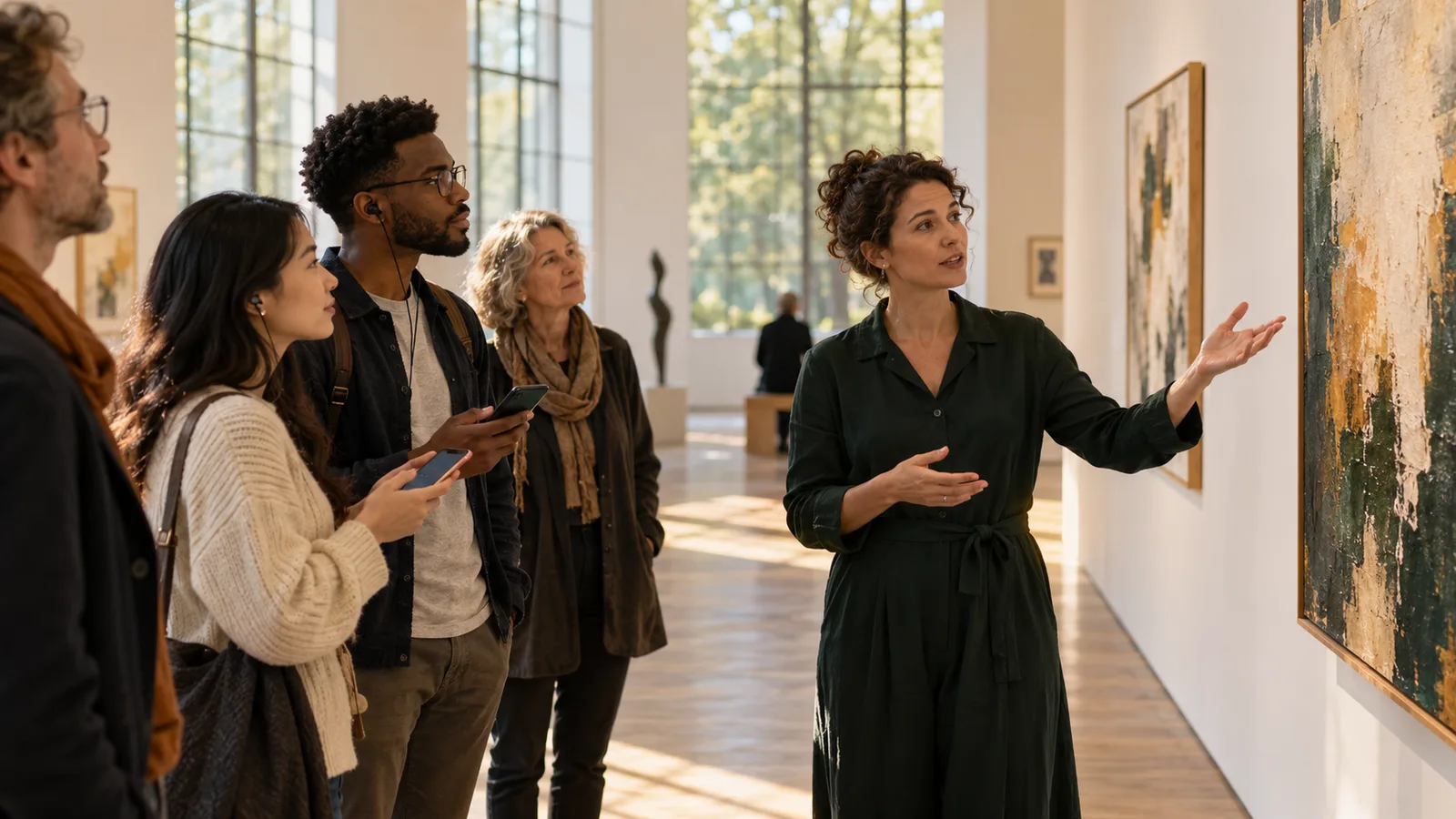
Gallery tours and exhibition openings
A shared display can suit an opening speech. On a tour, guests follow the guide through several rooms. QR access may be more useful in that setting.
Check internet and microphone coverage along the complete route. Test echoing spaces and areas shared with other talking groups. Make sure people can stand safely while reading and still look at the art.
Community evenings and meetings
For recurring events, a consistent setup helps: the same audio feed, prepared guest access and a named operator. Klausi translates both ways within a selected pair, so a German question and Turkish answer can be supported in one event.
Keep contributions sequential. Plan help for guests without smartphones and add the projector view where appropriate. A short structured talk makes a useful first test.
Theatre and performance
Rapid dialogue, music, role changes and artistic language may challenge live AI. With a known script, prepared surtitles are often easier to control. Decide with the artistic team which approach represents the content appropriately.
Live translation may support a post-show discussion, for example. It is not a promise that an entire theatre production can be captioned reliably without preparation.
Set up the pair and budget
Create the event in Klausi and select two of the 13 currently supported languages. Test contributions in both directions. One chosen pair does not imply several simultaneous target languages.
Klausi includes 3 free minutes per month for a short test. Longer events use one-time minute packs without an additional subscription. Purchased minutes do not expire. Check current pricing and allow for rehearsal, the event and a reserve. Include equipment and operation as well.
Sensitive content and follow-up
Cultural contributions can contain personal stories or political views. Agree what may appear publicly and explain AI processing. The guest link is not a protected space for confidential conversations.
Decide beforehand how text history will be handled. A saved text is not automatically approved for publication. The German voice processing information explains the framework. Collect feedback on content, pace and access after the event.
Start with a full rehearsal
The four-step setup guide helps with the first event. For German-Turkish formats, the community guide provides additional advice. Use rehearsal feedback to decide what other support guests need.
Turn the format idea into a complete workflow
Use the dedicated guides to theatre surtitles and post-show talks, book launches and readings, city tours and travel groups and exchange programmes. Each addresses different needs for content, movement and support.
Finish with a short language plan: audience, language pair, text or audio expectations, responsible operator and fallback. Use it to agree the approach with the venue, artistic team or programme organisers.