Separate the reading, conversation and questions
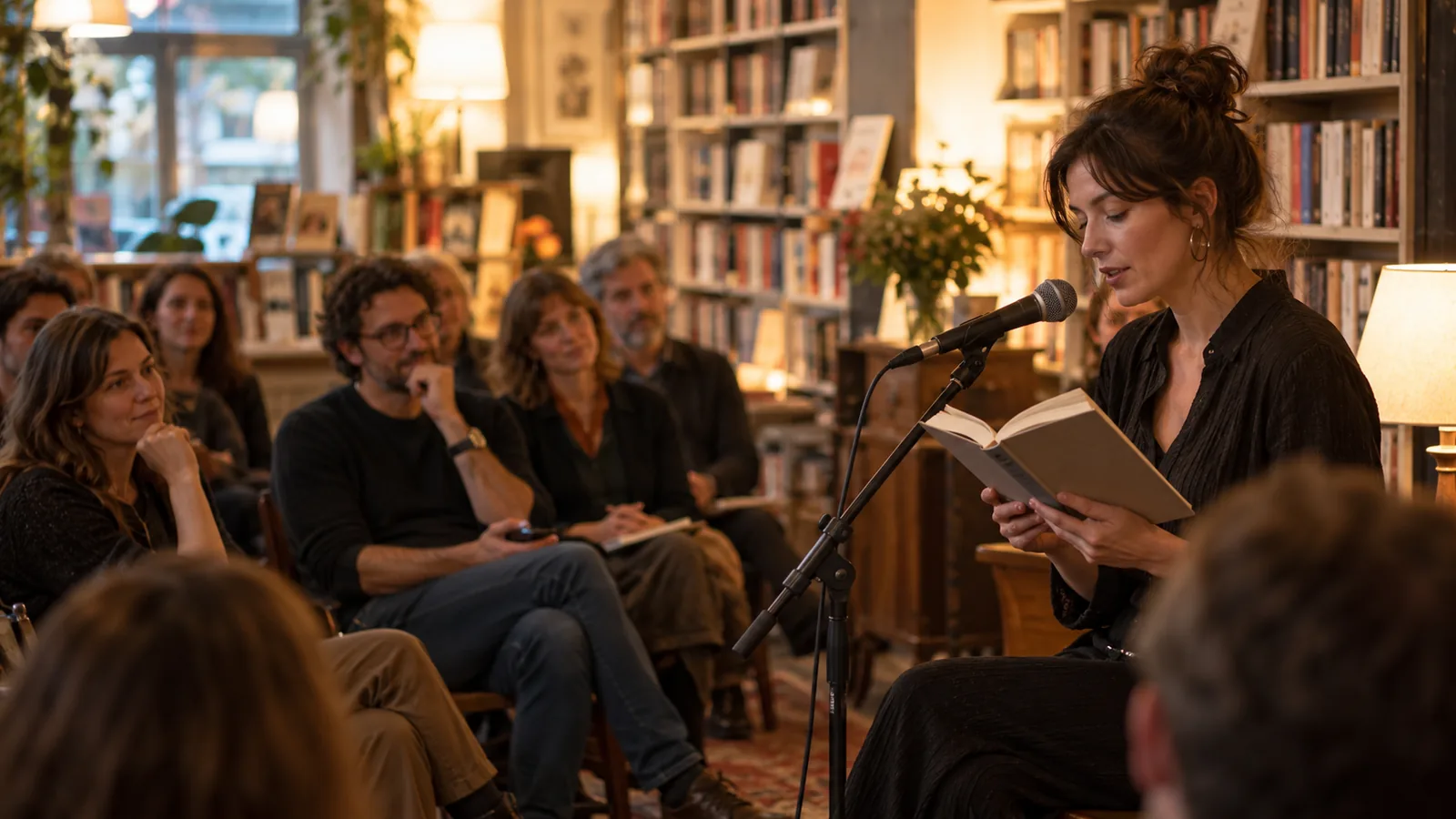
A book launch often combines several language situations. The author reads prepared text, a moderator provides context, and guests then speak spontaneously. Decide whether prepared translation, human interpreting or AI text fits each part.
In German-speaking listings you may see Buchvorstellung, Buchpräsentation or Lesung. Whether the venue is a German bookshop, an Austrian literature centre or a Swiss library, the relevant decisions concern the text, audience and desired output.
Assess literary quality before testing equipment
Metaphor, rhythm, irony and ambiguity cannot be judged from recognised word counts alone. A published or specially prepared translation may be more suitable for the reading itself. Agree selection, use and presentation with the responsible parties.
If you trial AI text, use a representative passage rather than only a welcome. Ask someone competent in the languages to assess meaning. Klausi does not provide automatic literary editing or guarantee the translation of wordplay.
Match the language pair to the audience
Ask about needs during invitations or registration. German–English may suit an international author talk. German–French could fit French-speaking guests in Switzerland. Other communities may need Turkish, Ukrainian or Arabic.
Klausi supports 13 selectable languages. An event uses one pair with translation in both directions. The language of the guide or interface does not determine the event pair. Plan separately for multiple simultaneous target languages.
Rehearse microphones, pauses and display
Use a suitable microphone close to the reader. Background music can make recognition harder. Test the actual audio path and reading pace. Structure passages so guests can move their attention between the book, stage and text.
A shared screen may suit a seated audience. The guest viewer can help with poor sightlines. Check both a smartphone and the back row. The projector setup guide covers the display.
An example 60-minute programme
This is a planning example. Adjust timing and translation methods to the text and agreed service. Allow extra time for the technical trial and a reserve.
| Time | Programme | Translation preparation |
|---|---|---|
| 0–5 min | Welcome and access | Show QR code, explain text output and disclose AI use |
| 5–25 min | Reading passages | Use approved translation or the previously tested workflow |
| 25–45 min | Author conversation | Microphones and orderly speaker changes |
| 45–60 min | Audience questions | Handheld microphone and time to read |
0–5 min
5–25 min
25–45 min
45–60 min
Moderate the question session
Ask guests to use a handheld microphone. A question that cannot be heard cannot be reliably translated either. If someone speaks without it, the moderator should repeat the question clearly before the answer.
Trial character names, locations and book titles beforehand. If the output changes the meaning, ask for a clear reformulation. The panel guide offers more advice for multiple speakers.
Inform guests and agree on follow-up
State the available languages and text format in the invitation. Ask about other access needs. A public guest link is unsuitable for confidential conversations. Inform contributors about the processing of their speech.
A text history of the reading is not automatically approved for publication. Agree separately how to use quotations and audience questions. Use the four-step setup guide for the technical start and the theatre guide for other stage formats.